

Understanding Pregnancy Related Pain
You’re growing a human, and while that’s exciting, it doesn’t always feel comfortable.
Aching in your lower back, pelvic discomfort, or sharp pain when turning in bed can quickly take the enjoyment out of pregnancy.
For many women, it’s not just the pain, it’s the frustration of not knowing what’s safe to do about it.
While these symptoms are common, they don’t have to be ignored or simply pushed through.
There are clear, physical reasons why your body changes so much during pregnancy and understanding them is the first step toward feeling more comfortable and supported.
At Morningside Chiropractic, we regularly see women at all stages of pregnancy experiencing back pain, pelvic girdle pain, and related symptoms.
Why Does Pregnancy Hurt?
Pregnancy-related pain is usually caused by three main factors: hormonal changes that affect joint stability, shifts in posture and centre of gravity, and increased strain on muscles and joints.
These changes commonly lead to lower back pain, pelvic girdle pain, and nerve related symptoms such as sciatica.
How Common is Back and Pelvic Pain in Pregnancy?
If you’re in pain, you are far from alone.
Research shows that 50–70% of pregnant women experience lower back pain, often alongside pelvic girdle pain, hip discomfort, or rib and upper back tension.
According to the NHS, back and pelvic pain are among the most commonly reported physical symptoms during pregnancy.
For some, symptoms are mild. For others, they can significantly affect sleep, mobility, and day-to-day life.
Despite this, many women are told it’s “just part of pregnancy” and don’t realise that support and treatment options are available.
Left unsupported, symptoms can persist beyond birth and into the postnatal period.
When should you get Pregnancy Pain checked?
It’s worth getting assessed if you notice:
- Pain affecting your sleep (especially turning in bed)
- Difficulty walking, climbing stairs, or getting in/out of a car
- Pain spreading into the hips or down the leg
- Symptoms that are worsening rather than improving
These are common presentations, but they often respond well to appropriate care.
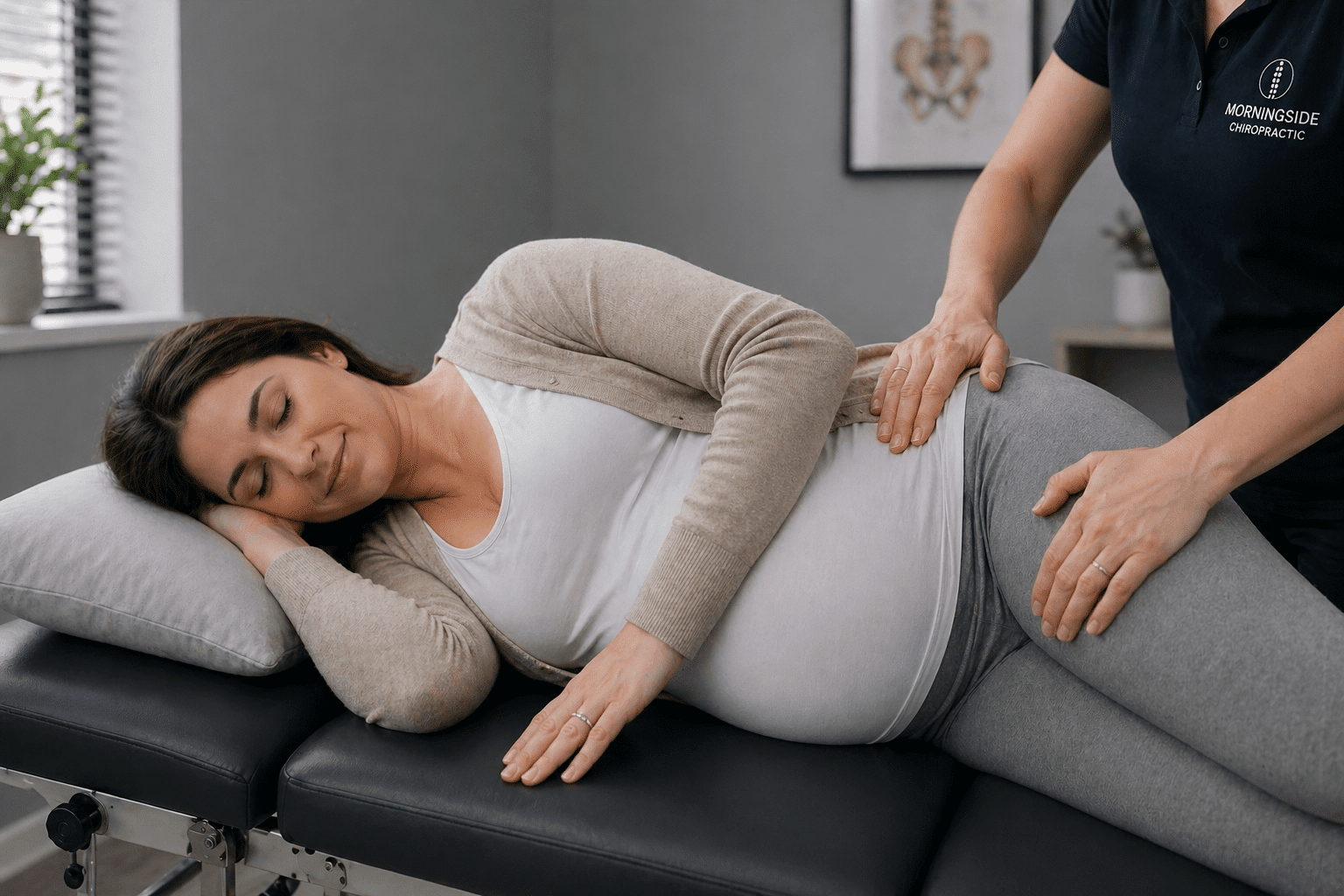
What causes Back and Pelvic Pain during Pregnancy?
The three main drivers are:
- Hormonal changes affecting joint stability
- Postural shifts as your centre of gravity changes
- Increased muscular strain and compensation
These factors build on each other as pregnancy progresses.
1. Hormonal changes and joint stability
During pregnancy, your body produces a hormone called relaxin, which softens ligaments to prepare the pelvis for birth.
Because this hormone affects the whole body, joints may become less stable. Muscles then have to work harder to compensate.
Over time, this can lead to fatigue, tightness, and discomfort — particularly in the lower back and pelvis.
This is a key contributor to pelvic girdle pain (PGP), a condition recognised by the Royal College of Obstetricians and Gynaecologists.
2. Postural changes and shifting centre of gravity
As your baby grows, your centre of gravity moves forward.
To stay balanced, your body adapts by:
- Increasing the curve in your lower back
- Tilting the pelvis forward
- Changing upper back and shoulder posture
These adjustments are normal, but they place additional strain on the muscles and joints supporting your spine and pelvis.
This is often why pregnancy back pain gradually builds over time.
3. Whole-body compensation patterns
Pregnancy changes rarely affect just one area.
It’s common to see:
- Tightness in the lower back
- Reduced gluteal activation
- Shortened hip flexors
- Increased tension in the upper back and neck
This is why pain can spread from the lower back into the hips or down the leg for example.
Effective care looks at the whole body, not just where the pain is felt.
Common types of Pregnancy Pain
In practice, certain patterns appear regularly:
- Lower back pain — often linked to joint irritation and muscular overload
- Pelvic girdle pain — felt at the front or back of the pelvis, especially during movement
- Sciatica-like symptoms — pain or tingling travelling down the leg
- Hip and rib discomfort — more common as pregnancy progresses
Many women also notice pain when:
- Turning in bed
- Standing on one leg
- Walking for longer periods
Other Common Pregnancy Aches and Pains
In addition to back and pelvic pain, many women experience:
- Foot and ankle discomfort or swelling — often due to increased load and fluid retention
- Calf cramps — particularly at night
- Hand and wrist symptoms — such as tingling or numbness (similar to carpal tunnel syndrome)
- Upper back and shoulder tension — linked to postural changes
These symptoms are part of the wider physical adaptations your body is making during pregnancy.
Is Chiropractic care Safe during Pregnancy?
This is an important and very common question.
Current evidence suggests that manual therapy, including chiropractic care, is safe during pregnancy when provided by appropriately trained practitioners. Reported adverse events are rare.
Guidance from organisations such as the NHS, Royal College of Obstetricians and Gynaecologists, and National Institute for Health and Care Excellence supports the use of conservative care approaches for managing musculoskeletal pain.
Care is always adapted:
- Gentle, pregnancy specific techniques
- Modified positioning for comfort and safety
- Individualised treatment planning
At Morningside Chiropractic, care is tailored to each stage of pregnancy, and where appropriate, communication with your GP or midwife is part of the process. Our team includes chiropractors with additional training in pregnancy and postnatal musculoskeletal care, including Katie Champion and Vicky Pittman, who regularly treat women experiencing pregnancy related back and pelvic pain.
Chiropractic care does not replace medical care, and any concerns should always be discussed with your healthcare provider.
Is severe pain normal during pregnancy?
Mild to moderate discomfort is common.
However, severe, persistent, or limiting pain is not something you need to simply accept.
Back pain, pelvic pain, and nerve related symptoms can often be assessed and improved with appropriate support.
What can Chiropractic care help with?
The goal of care is to improve how your body functions, not just reduce pain in the short term.
Treatment may help:
- Improve joint movement
- Reduce irritation in the spine and pelvis
- Ease muscular tension
- Support more efficient movement patterns
Many patients report improvements in:
- Pain levels
- Sleep quality
- Ease of movement
- Confidence in their body during pregnancy
When should you start care?
There is no single “right” time.
Some women seek support early, especially if they’ve had previous back or pelvic issues. Others come later, once symptoms develop.
Earlier support can help reduce strain before symptoms build, but it’s never too late to benefit from care.
What to expect at your first appointment
Your first visit includes:
- A detailed discussion of your symptoms and pregnancy
- Assessment of movement through the spine, pelvis, and hips
- A personalised treatment plan
Treatment is gentle and adapted to your stage of pregnancy, with exercises and advice to support you between visits.
Pregnancy Chiropractic FAQs
Yes — Chiropractic care can help reduce pregnancy related back and pelvic pain by improving joint movement, reducing muscle tension, and supporting better posture. Many women find it helps them move more comfortably, sleep better, and manage symptoms as pregnancy progresses.
Treatment during pregnancy is gentle and tailored to your comfort. Most techniques involve light pressure and controlled movements. Some mild soreness can occur after treatment, similar to exercise, but this usually settles within 24–48 hours.
Current evidence suggests that manual therapy is safe during pregnancy when provided by appropriately trained practitioners. Organisations such as the NHS and Royal College of Obstetricians and Gynaecologists recognise that musculoskeletal pain is common and may benefit from conservative care.
No — you can book directly. If needed, care can be coordinated with your GP, midwife, or consultant.
In many cases, yes — but it depends on your individual situation. A full history is taken before treatment, and care may be adapted or coordinated with your maternity team.
This varies depending on your symptoms, stage of pregnancy, and how your body responds.
Yes — Pelvic Girdle Pain is a common reason women seek care during pregnancy. Treatment focuses on improving movement, reducing muscle tension, and helping you move more comfortably in everyday activities.
You Don’t have to just get through it
Pregnancy is one of the most physically demanding things your body will go through.
Pain may be common — but that doesn’t mean it has to be ignored or left unsupported.
With the right understanding and appropriate care, many women find pregnancy far more comfortable and manageable than they expected.
About the Author
Katie Champion is a chiropractor at Morningside Chiropractic, registered with the General Chiropractic Council (GCC), with additional training in pregnancy and postnatal musculoskeletal care. Alongside colleague Vicky Pittman, she regularly supports women experiencing pregnancy related back and pelvic pain at all stages of pregnancy.
Book a Consultation
If you’re experiencing back pain, pelvic pain, or discomfort during pregnancy, it’s worth getting it assessed early — symptoms often respond best before they become more established.
👉 Learn more about pregnancy chiropractic care and book a consultation: