

As winter conditions settle across Edinburgh and much of Scotland, colder temperatures, frost and black ice create a perfect storm for back pain and spinal injuries. Even when snowfall is limited, icy pavements and reduced daylight significantly increase the risk of slips, falls and muscle strains. According to NHS Inform Scotland’s advice on staying safe in cold weather, winter conditions make walking surfaces more hazardous and increase the likelihood of injury, particularly when muscles are stiff and reaction times are slower.
At Morningside Chiropractic, we see a noticeable rise in back pain during the winter months. Cold temperatures cause muscles and joints to tighten, while reduced movement, prolonged sitting and winter driving can place additional strain on the spine. Sudden movements such as slipping on ice, lifting awkwardly or clearing snow can trigger acute pain or aggravate existing problems. The NHS also recognises that back pain is common and can worsen when everyday activities place extra stress on the spine, particularly during colder months.
To help you stay active, safe and pain free this winter, we have put together seven practical, evidence based tips to reduce the risk of back pain during icy conditions, whether you are walking outdoors, driving in cold weather or trying to stay mobile indoors.
Quick Winter Back Care Checklist
Walk carefully on icy pavements
Warm up before cold-weather activity
Lift and shovel safely
Wear supportive, non-slip footwear
Keep your back warm
Stay active indoors
Adjust your driving posture in cold weather
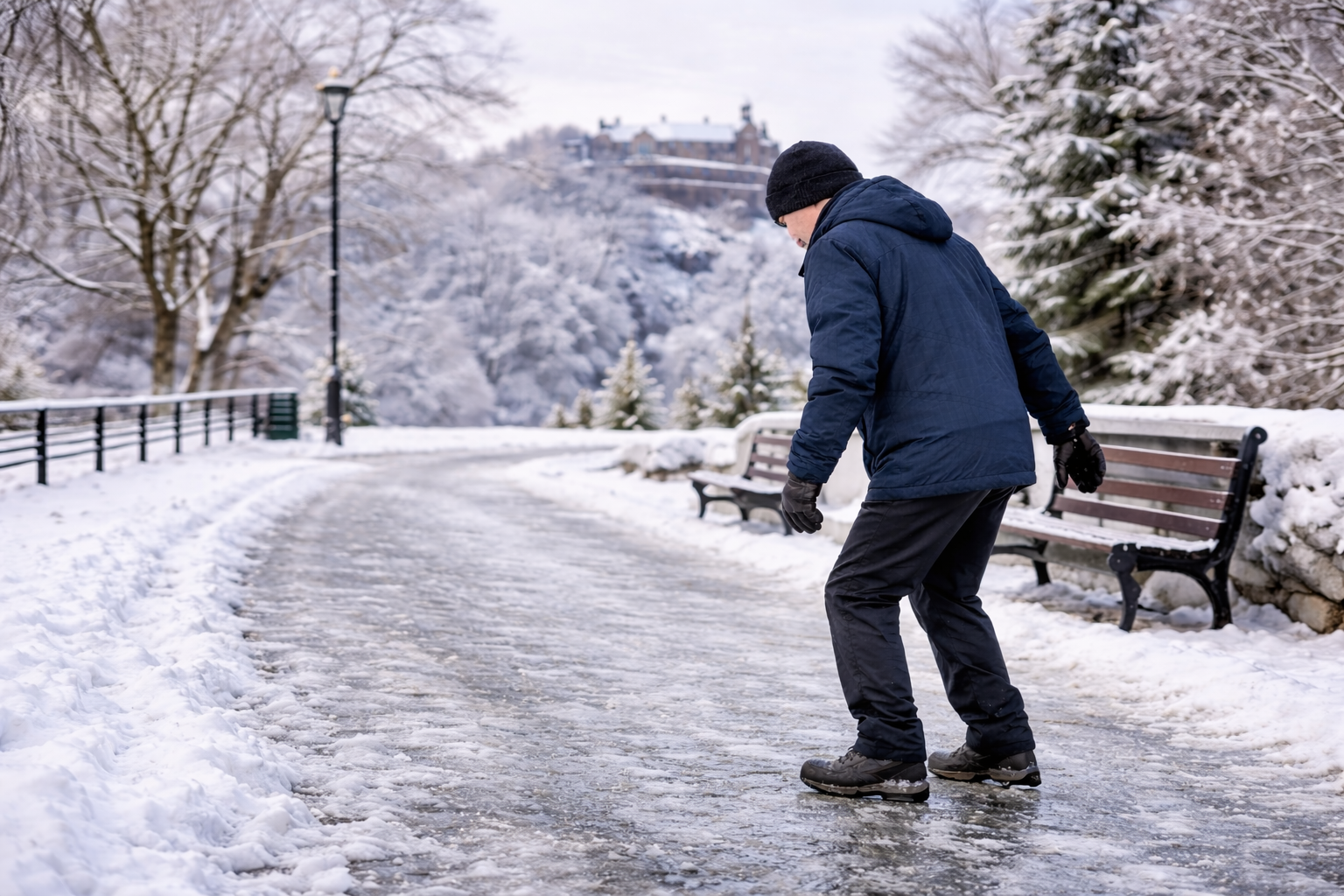
1. Master the “Penguin Walk” on Icy Pavements
Slips and falls are one of the most common causes of winter-related back injuries. A sudden loss of footing can send a sharp jolt through the spine, leading to muscle spasms, disc injuries, or joint irritation.
When walking on icy or frosty pavements, use the “penguin walk”:
- Take short, shuffling steps
- Keep your feet flat on the ground
- Lean slightly forward so your centre of gravity stays over your front leg
- Keep your hands out of your pockets for balance
This simple adjustment dramatically reduces your risk of falling and helps protect your spine from sudden trauma.
2. Warm Up Before Heading Out into the Cold
Cold muscles are less flexible and more prone to injury. Before heading outdoors — or before any physical task such as shovelling or carrying heavy bags — take five minutes to warm up.
Simple movements like:
- Marching on the spot
- Gentle trunk rotations
- Shoulder rolls and side bends
increase blood flow, improve flexibility, and reduce the likelihood of muscle strains.
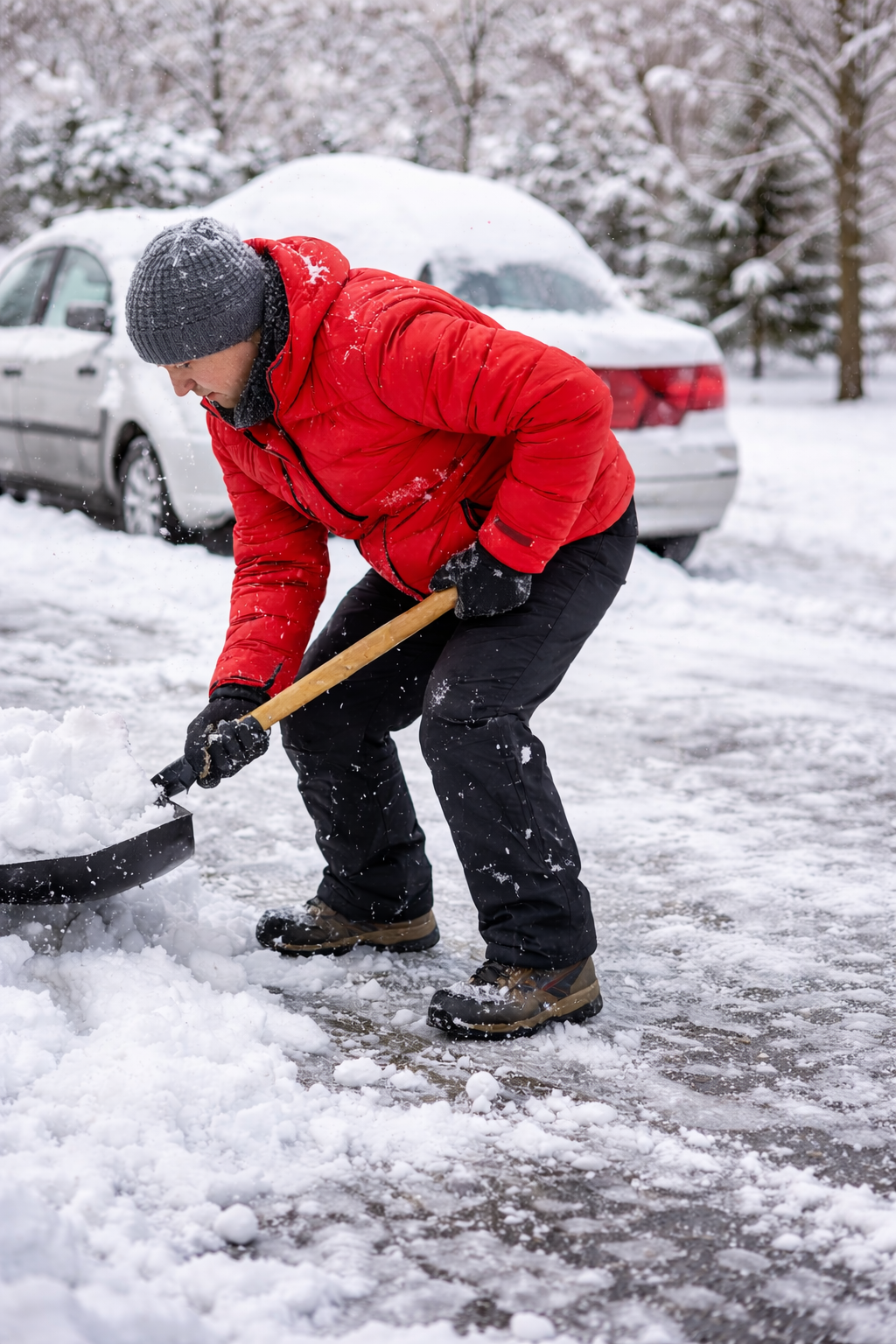
3. Shovel Smart, Not Hard: Protect Your Lower Back
Snow shovelling may be occasional in Edinburgh, but when it’s needed, it’s a leading cause of acute lower back pain. Cold, tight muscles combined with lifting and twisting is a risky combination.
If clearing snow or grit:
- Push snow where possible instead of lifting
- Bend at your hips and knees, not your back
- Keep the load close to your body
- Avoid twisting — turn your whole body by moving your feet
- Take regular breaks and work in small sections
These principles significantly reduce strain on the lumbar spine.
4. Dress for Spinal Success: Keep Your Core Warm
Cold weather causes muscles to contract in an effort to conserve heat, particularly around the neck and lower back. Prolonged muscle tension often leads to stiffness and discomfort.
Dress in layers and prioritise:
- A warm base layer
- Insulation around your lower back and abdomen
- A hat and scarf to reduce overall heat loss
Keeping your core warm helps your spinal muscles stay relaxed and supportive.
5. Choose Footwear That Supports Stability
Your footwear plays a crucial role in preventing winter injuries. Shoes with poor grip significantly increase the risk of slipping.
Look for:
- Deep, non-slip tread
- A wide, stable sole
- Low or flat heels
Avoid smooth soles or fashion-first footwear during icy conditions. Good traction helps keep you upright and protects your back from the impact of a fall.
6. Keep Moving Indoors to Prevent Winter Stiffness
Shorter days and poor weather often lead to reduced activity levels, but prolonged sitting or inactivity can worsen back pain.
To keep your spine healthy:
- Stand up and move every 30 minutes
- Incorporate gentle stretching or yoga
- Maintain core-strengthening exercises
Regular movement keeps joints lubricated and muscles strong — essential for spinal support during winter.
If you already experience ongoing discomfort, cold weather can aggravate underlying issues. Our guide to back pain and how chiropractic care can help explains why symptoms often worsen in winter and what you can do about it.
7. Protect Your Back When Driving in Winter Conditions
Winter driving places unique stresses on the spine. Cold temperatures cause muscle tension, while long periods of sitting — often in a flexed position — can aggravate lower back pain.
To reduce strain while driving:
- Adjust your seat so your hips are level with or slightly higher than your knees
- Use lumbar support to maintain your natural spinal curve
- Keep the steering wheel within comfortable reach
- Take breaks during longer journeys to stretch and move
These small adjustments can make a significant difference, especially during cold, stop-start winter traffic.
When Should You Seek Professional Help for Back Pain?
Most mild back pain improves within a few days with rest, gentle movement and self care. However, you should seek professional advice if your back pain:
- Persists for more than a few days without improvement
- Is severe or worsening rather than settling
- Follows a slip, fall or sudden injury
- Is accompanied by numbness, tingling or weakness in the legs
- Interferes with your ability to work, sleep or carry out daily activities
The NHS advises seeking further assessment if back pain does not improve or if symptoms are more concerning. Early assessment and appropriate care can help prevent minor problems from becoming long term issues.
Take Control of Your Spinal Health This Winter
Winter in Edinburgh (and across Scotland) should be enjoyed, not endured with back pain. By following these seven practical tips, you can significantly reduce your risk of injury, stiffness, and flare-ups during icy conditions.
If you’re struggling with persistent back pain, or if a slip, strain, or long drive has triggered discomfort, the team at Morningside Chiropractic is here to help. We provide evidence-based care tailored to your needs, helping you move well and stay active throughout the year.
Don’t let winter weather dictate your comfort. Book a free consultation today and keep your spine winter-ready.