Expert assessment and evidence-based treatment for upper & mid back pain, pain between the shoulder blades, rib joint pain and thoracic spine stiffness in Edinburgh.
Upper and mid back pain is becoming increasingly common. Long hours at a desk, working from home, poor posture, driving, stress, lifting children, gym training and repetitive work can all place extra strain on the joints and muscles of the thoracic spine. Many people describe a constant ache between the shoulder blades, stiffness when twisting, or pain that wraps around the ribs when taking a deep breath.
At Morningside Chiropractic, we regularly help patients from across Edinburgh with thoracic spine pain, rib joint problems and muscular tension affecting the upper back. While many episodes settle naturally, persistent pain or recurring stiffness often indicates that the joints, muscles or surrounding tissues need a more detailed assessment.
★★★★★ Rated 4.9 from 270+ Google Reviews
🏆 PPQM Quality Mark Holder (Royal College of Chiropractors)
📅 Appointments Available Monday–Saturday
Upper & Mid Back Pain: Understanding the Thoracic Spine
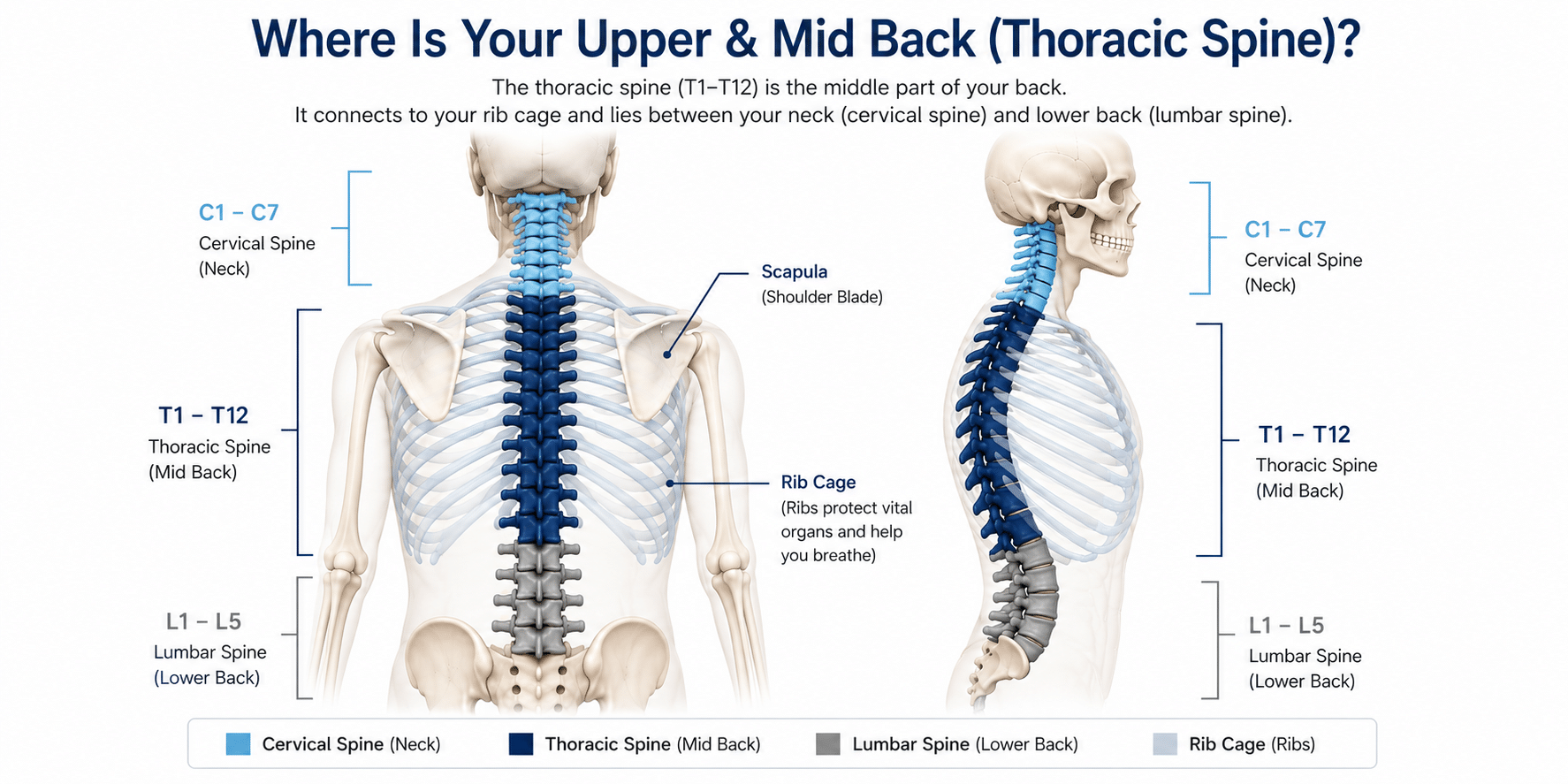
Many people are familiar with neck pain or lower back pain, but fewer realise that the area between the shoulder blades has its own name—the thoracic spine.
The thoracic spine is the middle section of your back, made up of twelve vertebrae (T1–T12). Unlike the neck and lower back, each thoracic vertebra is connected to a pair of ribs, creating a strong but less mobile part of the spine. This extra stability helps protect important organs such as the heart and lungs, but it also means the joints and surrounding muscles can become stiff, restricted or overloaded.
Pain from the thoracic spine can feel very different from person to person. Some people experience a deep ache between the shoulder blades after prolonged sitting, while others notice a sharp catching pain when twisting or taking a deep breath. For some, the discomfort develops gradually over months of desk work; for others it begins after lifting, gardening, sport or an awkward movement.
The good news is that most upper and mid-back pain is mechanical, meaning it arises from the joints, muscles, ligaments and other soft tissues rather than from serious underlying disease. Following a thorough assessment, many people respond well to a combination of hands-on treatment, targeted rehabilitation exercises and simple advice to help reduce strain on the thoracic spine.
Although this page focuses on the thoracic spine, pain in this area doesn’t always originate there. Because the neck, shoulders, ribs and lower back all work together, your chiropractor will assess the whole movement system to identify the true source of your symptoms. This comprehensive approach helps ensure you’re treated for the underlying cause of your pain, not simply where it hurts.
Do Any of These Symptoms Sound Familiar?
Upper and mid-back pain can affect people in many different ways. Some people notice a constant dull ache between the shoulder blades, while others experience a sharp pain when twisting, reaching overhead or taking a deep breath. Symptoms may come on suddenly after lifting or sport, or they may develop gradually after weeks or months of prolonged sitting, driving or desk work.
Although the symptoms can vary, they often follow recognisable patterns. If several of the following sound familiar, your pain may be coming from the thoracic spine, rib joints or surrounding muscles
Common Symptoms of Upper & Mid Back Pain
✔ Aching or pain between your shoulder blades
✔ Stiffness across your upper or mid back
✔ Sharp pain when twisting or taking a deep breath
✔ Pain that wraps around your ribs or chest wall
✔ Muscle tightness around your shoulder blades
✔ Pain after prolonged sitting, driving or desk work
✔ Discomfort after lifting, gardening or sport
✔ Pain that improves with movement but returns after resting
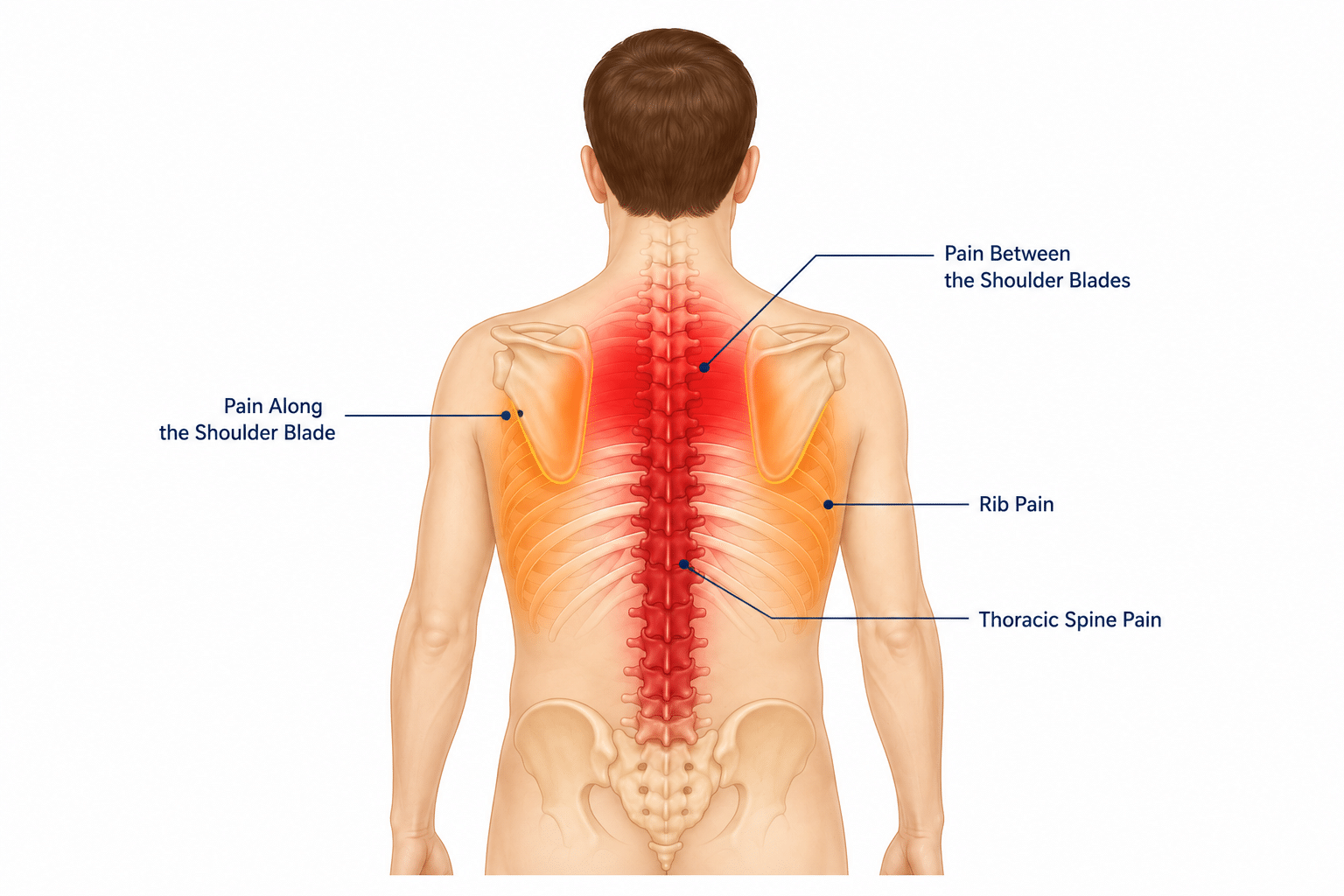
Where Is Upper & Mid Back Pain Usually Felt?
You may notice pain:
Between one or both shoulder blades
Along the inside border of the shoulder blade
Around the ribs
Across the centre of the thoracic spine
On one side more than the other
Around the lower shoulder blade
Occasionally wrapping around towards the front of the chest
Because the nerves, joints and muscles of the thoracic spine work closely together, pain isn’t always felt exactly where the underlying problem originates. This is one reason why a detailed assessment is so important before deciding on the most appropriate treatment
What Can Make Upper & Mid Back Pain Worse?
Many people notice that their symptoms become worse during certain everyday activities. While everyone’s symptoms are different, common aggravating factors include:
✓ Prolonged desk work
✓ Twisting or reaching
✓ Driving for long periods
✓ Lifting or carrying
✓ Looking down at a phone or laptop
✓ Golf, tennis or other sports
✓ Deep breathing, coughing or sneezing
✓ Poor sleeping positions
Identifying which movements or activities aggravate your symptoms often provides valuable clues about the underlying cause of your pain.
What Causes Upper & Mid Back Pain?
Upper and mid back pain is rarely caused by a single structure. More commonly, several joints, muscles and ligaments work together to produce pain and stiffness.
The thoracic spine is designed to provide stability while protecting your rib cage and vital organs. Unlike the neck and lower back, movement is naturally more limited because each thoracic vertebra is connected to the ribs. When these joints become irritated or the surrounding muscles become tight, everyday movements such as twisting, reaching, lifting or even taking a deep breath can become uncomfortable.
During your examination, your chiropractor will assess how the thoracic spine, ribs, shoulders and neck are moving together to identify the true source of your symptoms
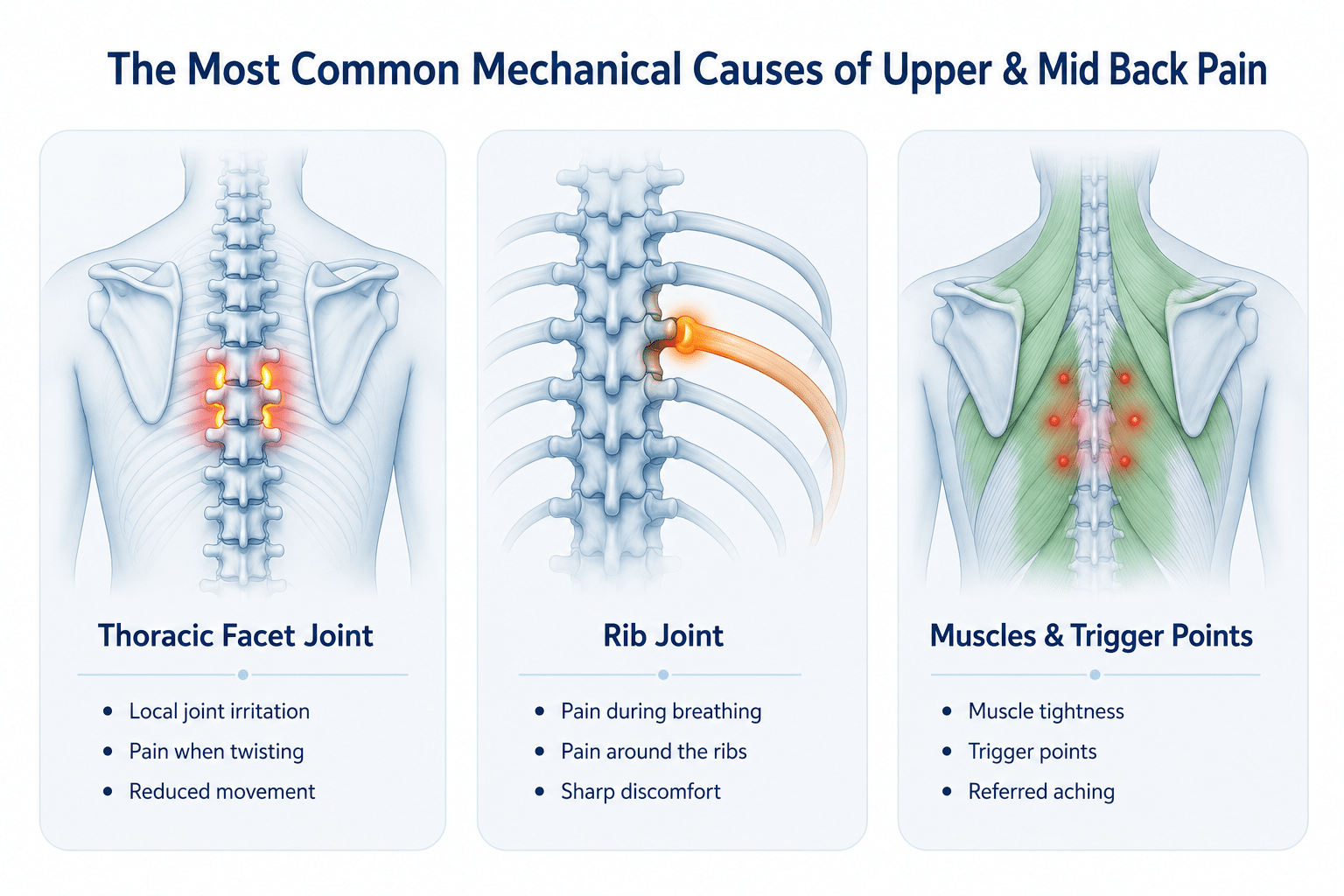
Thoracic Facet Joint Irritation
One of the most common causes of upper and mid back pain is irritation of the small joints that connect each vertebra.
These thoracic facet joints guide movement between the vertebrae and help the spine bend and rotate smoothly. When they become stiff or inflamed, they can produce local pain, reduced movement and discomfort when twisting, bending backwards or remaining in one position for prolonged periods.
Patients often describe this as a deep ache or sharp pain between the shoulder blades that may ease slightly with gentle movement
The thoracic spine also forms joints with each rib. These are called the costovertebral and costotransverse joints.
Although many people have never heard of these joints, they are a very common source of pain around the ribs and upper back. Irritation here may produce sharp pain during twisting, coughing, sneezing or deep breathing, and some people notice discomfort wrapping around towards the front of the chest.
Because rib joints move every time you breathe, even relatively minor irritation can become surprisingly uncomfortable.
Muscle Tension & Trigger Points
Muscles can also contribute significantly to upper and mid back pain.
Prolonged desk work, driving, gardening, lifting or repetitive overhead activity can place extra strain on muscles such as the levator scapulae, rhomboids, trapezius and the muscles that help support the ribs.
These muscles may become tight, fatigued or develop sensitive trigger points that produce aching between the shoulder blades and around the upper back. Muscle tension frequently develops alongside stiff joints, which is why treatment often focuses on improving both joint mobility and muscle function rather than treating one structure in isolation.
How Can Chiropractic Help Upper & Mid Back Pain?
Upper and mid back pain often responds well to conservative treatment when the underlying cause is accurately diagnosed. At Morningside Chiropractic, we don’t simply treat the area where you feel pain. Instead, we carry out a detailed assessment to determine which joints, muscles or other structures are contributing to your symptoms before recommending the most appropriate treatment.
In most cases, upper and mid back pain is mechanical in nature and does not require X-rays or MRI scans. National clinical guidelines recommend imaging only when there are signs of a more serious underlying condition or when the results are likely to change your treatment.
If, during your examination, we identify symptoms or findings that suggest further investigation is needed, we will explain our concerns and, where appropriate, refer you to your GP or for further imaging
A Thorough Assessment Comes First
Your initial consultation lasts approximately 45–60 minutes, giving your chiropractor time to understand how your symptoms developed, what aggravates them and how they are affecting your work, hobbies and everyday activities.
Your assessment may include:
Posture and spinal alignment
Thoracic spine movement
Rib joint mobility
Neck and shoulder movement
Muscle strength and flexibility
Neurological testing where appropriate
Orthopaedic examination to identify the source of your pain
This detailed assessment allows us to tailor treatment specifically to your diagnosis rather than applying the same treatment to every patient
Restoring Joint Movement
When upper and mid back pain is caused by irritation of the thoracic facet joints or rib joints, treatment often focuses on restoring normal movement and reducing joint irritation.
Depending on your diagnosis, this may involve chiropractic spinal manipulation (manual adjustments) or gentle joint mobilisation techniques to help improve movement, reduce stiffness and make everyday activities such as twisting, reaching or taking a deep breath more comfortable.
Where spinal manipulation is not appropriate, or where a gentler approach is preferred, we can use low-force mobilisation techniques or an Activator® instrument to encourage joint movement without traditional manual adjustments
Treating Tight Muscles & Myofascial Pain
Upper and mid back pain is frequently associated with tight or overworked muscles around the shoulder blades, neck and rib cage.
Treatment may include soft tissue therapy, myofascial release, stretching techniques and trigger point therapy to help reduce muscle tension and improve movement.
For appropriate patients, dry needling (medical acupuncture) may also be recommended by one of our chiropractors who has undertaken additional postgraduate training. At Morningside Chiropractic, this treatment is currently provided by Vicky Pittman and Tony Bleekers. Dry needling can help reduce muscle tension and complement hands-on treatment as part of an individualised care plan
Exercises to Help You Recover
Hands-on treatment is only one part of your recovery.
As your symptoms improve, your chiropractor may prescribe specific exercises to help:
Improve thoracic mobility
Strengthen the muscles supporting your spine
Improve posture
Increase flexibility
Reduce the likelihood of future flare-ups
These exercises are selected specifically for your condition and are designed to help you regain confidence in everyday activities, work and sport.
Alongside hands-on treatment and rehabilitation exercises, we’ll also discuss any work, sporting or everyday activities that may be contributing to your symptoms. This may include advice on desk setup, driving position, lifting techniques and simple changes to your daily routine that can help reduce strain on your upper and mid back. Rather than aiming for one “perfect posture”, our focus is on helping you move comfortably, vary your position regularly and build resilience through movement and exercise.
Personalised Care for Every Patient
No two patients are the same, which is why every treatment plan is tailored to the individual.
Some patients respond quickly after only a few visits, while others with longer-standing or more complex problems may require a more gradual approach. Throughout your care, we’ll explain our findings, discuss your treatment options and work with you to help you return to work, exercise and the activities you enjoy with greater confidence and comfort.
Could Something Else Be Causing My Upper & Mid Back Pain?
Although most upper and mid back pain is caused by mechanical problems affecting the joints, muscles and soft tissues, not every episode of pain has the same cause. One of the most important parts of your initial consultation is determining whether your symptoms are likely to respond to conservative treatment or whether further medical assessment may be appropriate.
Most people with mechanical upper back pain do not require X-rays or MRI scans. Current clinical guidelines recommend imaging only when the findings are likely to influence diagnosis or treatment. If your history or examination suggests that further investigation is appropriate, we’ll explain our findings and, where necessary, refer you to your GP or for imaging.
Other Conditions That Can Cause Upper & Mid Back Pain
While less common than muscle, joint and rib problems, a number of other conditions can also cause pain in the upper and middle back. These include:
Osteoarthritis and age-related spinal changes
Osteoporosis and vertebral compression fractures
Inflammatory arthritis
Shingles
Thoracic disc problems (which are much less common than in the neck or lower back)
Referred pain from the heart, lungs or upper abdominal organs
Recognising these conditions is an important part of every assessment. Your chiropractor will consider whether your symptoms fit a typical mechanical pattern or whether another underlying cause should be investigated. If we believe further medical assessment would be beneficial, we’ll explain why and help guide you towards the most appropriate care.
Postural and biomechanical screening
Neurological screening when needed
Red‑flag screening with referral pathways if imaging is warranted
At the end, we explain your diagnosis and outline a recovery plan.
When Should You Seek Medical Advice?
Most episodes of upper and mid back pain improve with time and appropriate treatment. However, certain symptoms should always be assessed promptly, particularly if they develop suddenly or are associated with other health concerns.
Signs You Shouldn’t Ignore
You should seek prompt medical advice if your upper or mid back pain is accompanied by:
Chest pain, shortness of breath or pain spreading into your arm or jaw
Significant trauma, such as a fall or road traffic accident
Fever, chills or unexplained weight loss
A previous history of cancer with new unexplained back pain
Progressive weakness, numbness or difficulty walking
Loss of bladder or bowel control
Severe pain that is constant, wakes you at night or continues to worsen
These symptoms do not necessarily indicate a serious condition, but they should always be assessed by an appropriate healthcare professional.
If your symptoms appear to be mechanical in nature, chiropractic care may help reduce pain, restore movement and improve your ability to return to your normal daily activities. Following your assessment, we’ll explain our findings, discuss your treatment options and advise you honestly if we believe chiropractic care is appropriate—or if another healthcare professional or further investigations would be more suitable.
Ready to Find the Cause of Your Upper & Mid Back Pain?
Whether your symptoms have developed suddenly or have been bothering you for some time, understanding what’s causing your pain is the first step towards effective treatment.
During your initial consultation, one of our experienced chiropractors will carry out a thorough assessment, explain our findings in clear, straightforward language and discuss the treatment options most appropriate for you. If we believe your symptoms would be better managed with further investigations or by another healthcare professional, we’ll explain why and help guide you towards the most appropriate care.
Not Sure Whether Chiropractic Is Right for You?
If you’d like to speak to one of our chiropractors before booking an appointment, we also offer a free 15-minute consultation. It’s an opportunity to discuss your symptoms, ask questions and find out whether chiropractic care is likely to be appropriate for you.
Call us on 0131 447 3794 or book online today to arrange your free consultation or initial assessment.
Why Patients Choose Morningside Chiropractic for Upper & Mid Back Pain Treatment
✓ Established in Edinburgh since 2005, helping patients across Morningside, Bruntsfield, Marchmont and the wider Lothians.
✓ Evidence-based care guided by current NICE, NHS and Royal College of Chiropractors recommendations.
✓ Five GCC-registered chiropractors with over 75 years of combined clinical experience assessing and treating upper and mid back pain, rib dysfunction, postural problems and sports injuries.
✓ Holder of the Royal College of Chiropractors Patient Partnership Quality Mark (PPQM), recognising excellence in patient-centred care.
✓ Rated among Edinburgh’s leading chiropractic clinics, with more than 270 five-star Google reviews from patients.
Meet Our Upper & Mid Back Pain Team
Assessment and treatment of upper and mid back pain is carried out by our experienced team of GCC-registered chiropractors:
• Alan Cavanagh BSc DC
• Vicky Pittman MChiro DC
• Katie Champion MChiro DC
• Ben Scott MChiro DC
• Tony Bleekers MTech Chiro DC
Every assessment includes a detailed examination to identify the true source of your symptoms and determine whether your pain is arising from the thoracic spine, rib joints, surrounding muscles or another structure. We’ll explain our findings clearly and create an individual treatment plan based on your diagnosis and goals.
Upper and mid back pain often overlaps with problems affecting the neck, shoulders and surrounding muscles. You may also find these resources helpful:
Neck Pain Treatment Edinburgh – Learn how problems affecting the neck can sometimes refer pain into the upper back, shoulder blade or arm.
Headache Treatment Edinburgh – Discover how tension headaches and cervicogenic headaches can be linked to neck and upper back dysfunction.
Low Back Pain Treatment Edinburgh – Understand how lower back pain differs from upper and mid back pain, including common causes and treatment approaches.
Sports Massage Edinburgh – Find out how sports and remedial massage may help relieve muscle tension and complement chiropractic treatment.
Pain between the shoulder blades is most commonly caused by irritation of the joints, muscles or ligaments in the thoracic spine. Poor posture, prolonged desk work, lifting, driving, sporting activities and muscle tension can all contribute. In some cases, pain may also be referred from the neck or the joints where the ribs attach to the spine. A thorough assessment helps identify the underlying cause and the most appropriate treatment.
Yes. Spending long periods sitting at a desk, driving or looking down at a phone or laptop can increase the strain on the muscles and joints of the upper and mid back. While posture alone is rarely the sole cause of pain, prolonged static positions and reduced movement can contribute to symptoms. As part of your treatment, we’ll provide practical advice on workstation setup, posture, movement breaks and exercises to help reduce strain and prevent your symptoms from returning.
It can. If the joints between the ribs and spine or the surrounding muscles become irritated, taking a deep breath may temporarily reproduce your pain. However, if your symptoms are accompanied by significant chest pain, shortness of breath or difficulty breathing, you should seek prompt medical assessment to rule out other medical causes.
Yes. If your symptoms are caused by a mechanical problem affecting the joints, muscles or ribs, chiropractic care may help reduce pain, improve movement and restore normal function. Treatment may include spinal manipulation or mobilisation, soft tissue therapy, rehabilitation exercises and advice on posture and ergonomics. Every treatment plan is tailored to the individual following a thorough assessment.
Most people with upper and mid back pain do not require X-rays or MRI scans. Current clinical guidelines recommend imaging only when the results are likely to influence diagnosis or treatment. During your consultation, your chiropractor will determine whether imaging is appropriate based on your symptoms, medical history and examination findings.
The number of treatments required varies depending on the cause of your symptoms, how long you’ve had them and your individual goals. Some patients improve within a few visits, while others with longer-standing or more complex problems may benefit from a longer course of care. Following your assessment, we’ll explain our findings and recommend a treatment plan tailored to your needs.
If your upper or mid back pain has persisted for more than a couple of weeks, keeps returning, is affecting your work, sleep or daily activities, or you’re unsure what’s causing it, it’s sensible to have it assessed. An early diagnosis can often help prevent symptoms becoming more persistent and guide you towards the most appropriate treatment. If we identify signs that suggest another underlying cause, we’ll explain our findings and recommend the most appropriate next steps.
This page was written and reviewed by the clinical team at Morningside Chiropractic in July 2026 and updated in line with NICE, BESS and NHS Inform guidelines.
Proven Results!
Trusted & Professionally Endorsed
Highly Skilled & Experienced Team
Personalised Treatment & Expert Advice
What our patients say
We love helping our patients to feel better and become pain free.
- Caroline B (Facebook) ⭐⭐⭐⭐⭐
I would highly recommend anyone who is suffering with back / shoulder pain or any other pain... I can not believe the huge difference.- Caroline B (Facebook) ⭐⭐⭐⭐⭐
- Megan B (Facebook) ⭐⭐⭐⭐⭐
...I now have full movement in my shoulders. I no longer get any pains when lifting my arms and have none of the day to day struggles I had before- Megan B (Facebook) ⭐⭐⭐⭐⭐
- Jonney C (Google) ⭐⭐⭐⭐⭐
Great service, very friendly and really effective. Excellent. Sorted out rotator cuff problem.- Jonney C (Google) ⭐⭐⭐⭐⭐