Sciatic nerve pain doesn’t have to control your life. If pain is travelling from your back or buttock into your leg, we’ll help you understand what’s causing it — and guide you through a clear, evidence-based plan to get you moving comfortably again.
Expert Sciatica Care in Morningside, Edinburgh (EH10)
Sciatica can be frightening, frustrating and exhausting. Sharp or burning pain down the leg. Tingling or numbness that makes sitting uncomfortable. Difficulty walking, sleeping, driving or concentrating at work.
If you’re dealing with sciatica in Edinburgh or the surrounding Lothians, the good news is that most people improve with the right assessment, guidance and care.
At Morningside Chiropractic, we help you understand what’s causing your symptoms and guide you through a clear, evidence-based plan to support recovery — safely and realistically.
PPQM Award Holder – Royal College of Chiropractors (2026–2028)
4.9★ Google rating from 260+ reviews
Edinburgh’s largest chiropractic team (5 chiropractors)
Same-week appointments — often within 48 hours
Established Edinburgh clinic with 20 years’ experience
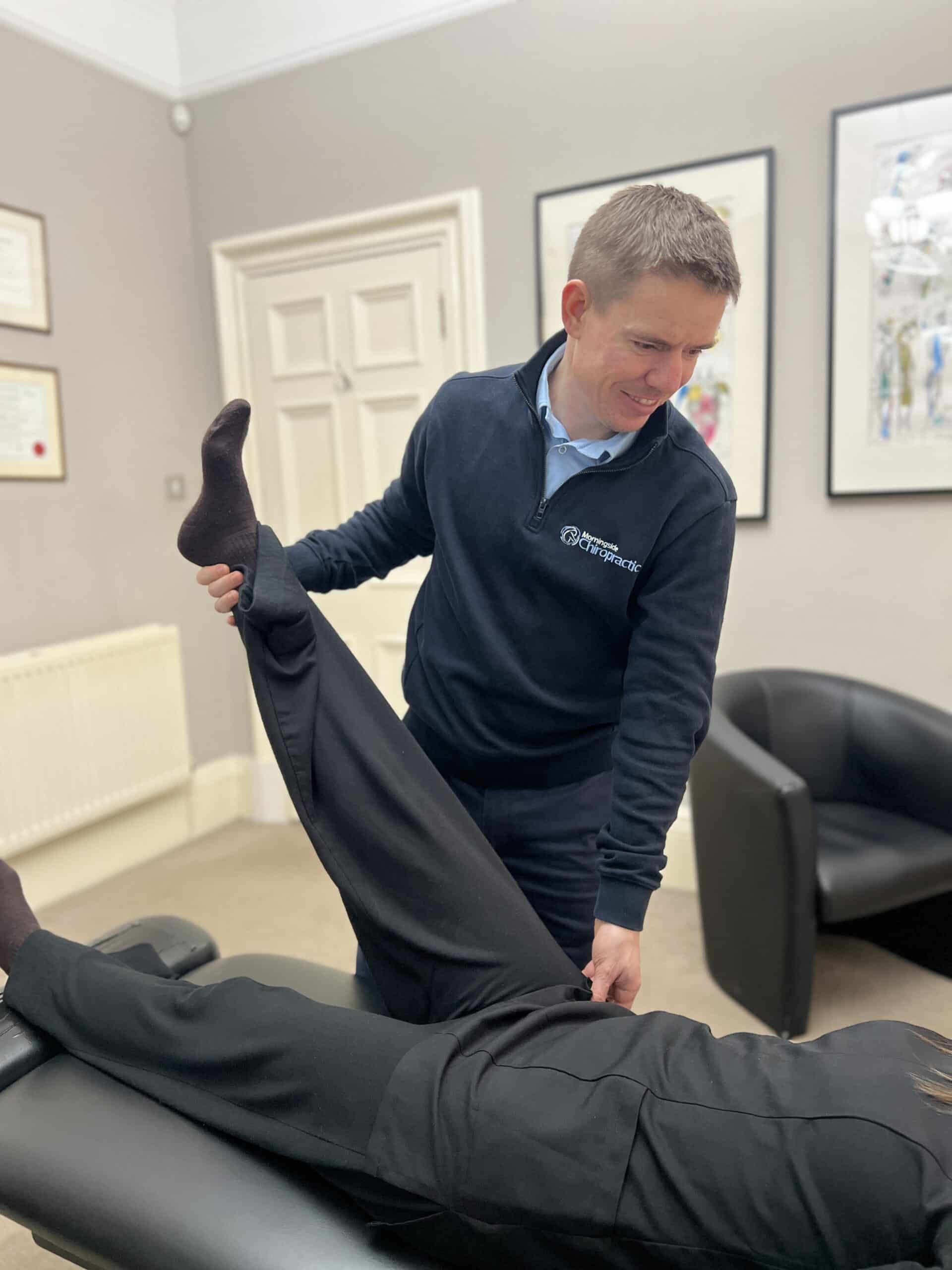
Chiropractor Tony Bleekers performing a Straight Leg Raise (SLR) test as part of a sciatica assessment at Morningside Chiropractic.
Is Sciatica Affecting Your Life?
Sciatica isn’t just about pain. It can disrupt your sleep, limit your ability to work, cancel plans, and create constant anxiety about triggering symptoms again.
You may be experiencing:
Pain that radiates from the lower back or buttock into the leg
Burning, tingling, pins and needles, or numbness in the leg or foot
Symptoms that worsen with sitting, bending, coughing, or driving
Difficulty standing, walking, or climbing stairs
A feeling of weakness or reduced confidence in one leg
If this sounds familiar, you’re not alone. Sciatica is a common cause of leg pain and, in many cases, symptoms improve with appropriate assessment, guidance, and conservative care. Understanding what is contributing to your symptoms is an important first step toward recovery.
What Is Sciatica?
Sciatica is a term used to describe pain caused by irritation or increased sensitivity of the sciatic nerve, often felt in the lower back, buttock, and leg. According to the NHS definition of sciatica, it is considered a symptom rather than a diagnosis, and symptoms can vary significantly between individuals.
In practice, this means two people with “sciatica” may have very different underlying causes. Some leg pain is driven by nerve sensitivity, while other symptoms that feel like sciatica may originate from joints, muscles, discs, or movement patterns — which is why a thorough assessment is essential before deciding on the most appropriate treatment approach.
What Usually Causes Sciatica?
Sciatica can develop suddenly or build gradually over time. Common contributors include:
Disc-related irritation (such as a disc bulge or prolapse)
Spinal stenosis (narrowing of spaces around the nerves)
Deep gluteal or piriformis-related muscle tension
Facet joint or sacroiliac joint irritation
Spondylolisthesis (vertebral slippage)
Lifestyle and load factors such as prolonged sitting, repetitive bending, heavy lifting, long driving hours, or reduced strength and conditioning
Sciatica is often multifactorial, meaning several of these factors may be involved at once. Our role is to identify the most relevant drivers in your case and tailor care accordingly.
Red Flags: When You Should Seek Urgent Medical Help
Most sciatica is not dangerous and improves with appropriate care. However, seek urgent medical help (GP, NHS 111 or A&E) if you experience:
Loss of bladder or bowel control
Saddle numbness (around the genitals or inner thighs)
Rapidly worsening weakness in one or both legs
Severe, escalating pain with fever, unexplained weight loss or night sweats
Sciatica following significant trauma
A history of cancer with new onset sciatica
We always screen for these signs during assessment. If we’re concerned, we won’t treat you — we’ll explain why and help you access the most appropriate care.
How We Help Sciatica at Morningside Chiropractic
Every case of sciatica is different. Some people improve quickly; others — particularly with longer-standing symptoms — need a more structured approach. We’ll discuss realistic expectations at your first appointment and adjust care based on your progress.
Your care plan may include:
Spinal Mobilisation or Manipulation (Where Appropriate)
Gentle, specific techniques to improve movement and reduce mechanical strain. If manipulation isn’t suitable or preferred, we use low-force alternatives.
Soft Tissue Therapy
Targeted work on muscles and connective tissues around the lower back, hips and buttocks to reduce tension contributing to pain patterns.
Dry Needling (Western Acupuncture)
Used selectively as part of care when muscle-related contributors are present. At Morningside Chiropractic, this is provided by Vicky Pittman and Tony Bleekers within chiropractic sessions.
Rehabilitation & Exercise
A realistic home programme focused on mobility, strength (core and hips), and a gradual return to normal activity — not generic exercise sheets.
Posture, Ergonomics & Lifestyle Advice
Practical guidance for sitting, desk work, lifting, driving and sleep positions to reduce flare-ups and support long-term recovery.
Many people notice meaningful improvement within weeks, but recovery timelines vary depending on symptom duration, severity and contributing factors.
Your First Appointment: What to Expect
Our goal is to find the cause of your Sciatica symptoms and help you get back to normal life as quickly and safely as possible.Your first visit focuses on clarity, safety and a plan you understand .
When you come in for your first appointment, you’ll receive the same thorough, patient-centred approach we outline on our Your First Visit page. Here’s what you can expect:
A thorough consultation about your symptoms, health history and lifestyle
Orthopaedic and neurological testing where appropriate
Red-flag screening for safety
A clear explanation in everyday language
A personalised plan outlining recommended care and expectations
First treatment where appropriate
Practical self-help advice you can start immediately
Not sure if it’s Sciatica?
Start with a free consultation and we’ll guide you through your options.
Our Clinical Standards & Evidence-Based Approach
We follow recognised UK guidance for low back pain and sciatica, including:
We are proud holders of the PPQM award (2026–2028) from the Royal College of Chiropractors, recognising excellence in meeting patient expectations across communication, accessibility, education, privacy and record keeping.
Real Patients. Real Relief. Real Results.
“I was suffering from extreme pain down my left leg and was really struggling with my work as I sit for long periods of time… After another 4 appointments, the relief is amazing. I continue with my exercises and I am so grateful for Alan’s help.”
Brian W.
“I was in a lot of pain with my back and right leg. My sister recommended Vicky — so glad I went. After a few weeks of sessions the difference was remarkable. I highly recommend.”
Sarah C.
“I was suffering from extreme pain down my left leg and was really struggling with my work as I sit for long periods of time… After another 4 appointments, the relief is amazing. I continue with my exercises and I am so grateful”
Anne R
“My lower back, hip and leg were all incredibly painful, and Alan really helped to ease the pain through adjustments and showed me what to do at home. I have been 3 weeks in a row, and the difference is huge. What a relief.”
Sciatica is a term used to describe pain caused by irritation or increased sensitivity of the sciatic nerve. It describes a pattern of symptoms rather than a diagnosis, which means the underlying cause can vary between individuals. Identifying what is driving the nerve irritation is key to choosing the most appropriate next steps.
No. While sciatica typically causes pain that travels from the lower back or buttock down the leg, other conditions involving joints or muscles can produce similar symptoms. This is why leg pain should not be self-diagnosed and why assessment is important when symptoms persist or worsen.
Many people experience meaningful improvement over weeks to a few months, particularly with appropriate guidance and activity modification. Recovery timelines vary depending on the cause, how long symptoms have been present, and overall health. Some cases improve naturally, while others benefit from structured conservative care.
You should seek urgent medical advice if sciatica is accompanied by loss of bladder or bowel control, numbness around the genitals or inner thighs, rapidly worsening leg weakness, or severe unexplained symptoms such as fever or weight loss. These signs may indicate a more serious condition that requires immediate assessment.
In most cases, no. Sciatica can often be assessed through careful clinical history and examination. Imaging such as MRI is usually only recommended when symptoms do not progress as expected or when there are signs suggesting a more serious underlying issue.
Ready to Get Relief From Sciatica?
Sciatica doesn’t have to control your life. With a clear diagnosis, evidence-based care and the right support, most people make meaningful progress.